Last updated October 15, 2026








Free written scope consultation - allowances, timeline, and change-order rules on paper before a single trade is scheduled
General Contractor Maintenance Checklist for Fresno Homeowners
A Fresno attic can reach 150°F on a July afternoon. That single number drives more of this city’s home maintenance failures than any other factor, yet most homeowner checklists treat “check attic ventilation” as one annual checkbox sitting between “test smoke detectors” and “clean gutters.” The truth is that heat, dust, and irrigation runoff interact with a Fresno house in ways a generic national template never accounts for. This guide is organized by what Fresno actually does to a home, season by season, and it covers the maintenance items that prevent the five-figure repairs we see most often as a General Contractor in Fresno. You’ll learn which tasks deserve twice-yearly attention, which ones require a licensed California contractor, and how to document your own work so it counts.
Quick Answer
A Fresno home maintenance checklist should prioritize attic heat management, exterior caulk and sealant integrity, irrigation-adjacent hardscape inspection, and Tule fog season moisture checks, all on a twice-yearly cadence tied to Fresno’s specific climate patterns rather than a generic annual schedule. The most expensive repairs we see come from neglected attic ventilation, caulk failures at stucco joints, and drip system runoff undermining concrete. Legally, homeowners can handle inspection and documentation of most items themselves, but any repair involving structural, electrical, plumbing, or gas work requires a licensed California contractor offering General Contractor services.
Styles & brands we work with







Table of Contents
- Attic Temperature Management: Fresno’s First-Tier Maintenance Item
- Caulk and Sealant Inspection: Why Twice-Yearly Is the Fresno Standard
- Irrigation-Adjacent Hardscape: Where Drip Systems Meet Concrete
- Tule Fog Season: Moisture Points Most Checklists Miss
- HVAC and Duct Care in a Dust-Active Climate
- Exterior Paint Film Integrity and Stucco Maintenance
- What Requires a Licensed Contractor in California vs. DIY Documentation
- A Season-by-Season Maintenance Calendar for Fresno
Attic Temperature Management: Fresno’s First-Tier Maintenance Item
The single most underrated maintenance task in Fresno is attic temperature management. When attic air hits 150°F, three things happen quietly: asphalt shingle adhesives soften and lose grip, caulk seals around vents and penetrations bake out and crack, and HVAC duct tape and mastic connections degrade faster than they would anywhere with a milder summer. A homeowner who checks ridge vent condition, radiant barrier integrity, and soffit clearance every spring and fall will catch failures before they become roof leaks or cooling system failures.
Here’s what to inspect, in order of importance:
- Ridge vent condition: Walk the roofline from the ground with binoculars if you prefer not to climb. Look for missing or shifted ridge cap shingles, visible gaps, or debris blocking the vent slots. A blocked ridge vent turns an attic into a convection oven.
- Radiant barrier inspection: If your home has a radiant barrier (the foil-faced material stapled to rafters), check for tears, sagging, or dust accumulation. Dust on a radiant barrier reduces its reflectivity by up to 40%, and Fresno’s air carries enough dust to make this a real issue.
- Soffit clearance: Soffit vents are the intake side of your attic’s air circulation. If insulation has been pushed over them, or if birds have nested in the eaves, air can’t flow. Clearance matters more in Fresno than in coastal climates because the temperature differential is so much larger.
- Attic fan operation: If you have a powered attic fan, test it in spring. A failed attic fan in July means attic temperatures climb past 160°F, and that’s when shingles start curling and plywood sheathing begins drying out.
We’ve seen attics in Clovis and north Fresno where a single failed soffit vent led to a $2,400 roof repair within two summers. The fix is usually cheap: clearing the vent and adding a passive ridge vent if one isn’t already there. The repair is expensive only after the damage is done.
Caulk and Sealant Inspection: Why Twice-Yearly Is the Fresno Standard
Fresno’s ultraviolet index runs high or very high for roughly eight months of the year, and the city sees temperature swings of 30 to 40 degrees between day and night during spring and fall. That combination of UV exposure and thermal cycling breaks down exterior caulk and sealant faster than almost any other climate in California. The generic advice to “inspect caulk annually” is wrong for this city. Exterior caulk deserves a twice-yearly walk, once in early spring and once in early fall.
Here’s the specific inspection list:
- Window and door perimeters: Look for caulk that has pulled away from the stucco or trim, turned chalky, or cracked. Failed caulk at windows is the number one entry point for both water and dust during the dry season.
- Stucco control joints: Stucco expands and contracts with temperature. The sealant in control joints (the vertical lines running down stucco walls) is designed to flex. Once it hardens, the joint itself can crack, and water gets behind the stucco during the next rain.
- Where two materials meet: The joint between stucco and wood trim, stucco and brick, or siding and concrete. Different materials expand at different rates, so these joints fail first.
- Roof penetrations: Pipe boots, vent stacks, and chimney flashing all rely on sealant. On a 110°F roof surface, that sealant bakes out faster than anywhere else on the house.
- Exterior outlet and fixture boxes: Anywhere a box penetrates the stucco, the sealant around it should be checked. These are small and easy to miss, but water follows the path of least resistance.
Replacing exterior caulk is a homeowner-legal task in California, as long as it’s purely cosmetic and doesn’t require removing or altering structural components. Use a high-quality polyurethane or hybrid sealant rated for exterior UV exposure. Quikrete and Sakrete both make sealant products that hold up well in Fresno conditions, available at any local hardware store.
Irrigation-Adjacent Hardscape: Where Drip Systems Meet Concrete
Fresno’s soil is a mix of sandy loam and clay, and it expands and contracts with moisture far more than most homeowners realize. Add an irrigation system running on a summer schedule, and you have a recipe for concrete flatwork failure. The most common call we get after the first hard rain of the season is from homeowners noticing that a patio slab, walkway, or driveway edge has cracked or settled. The cause is usually tied to irrigation, not the concrete itself.
Here’s what to check, twice a year:
- Walk the joint where landscaping meets the foundation: Look for soil erosion or pooling along the foundation line. Drip emitters placed too close to the house keep that soil wet, and wet soil expands. Over time, the pressure can crack foundation perimeter concrete.
- Check drip line placement around patios and walkways: Drip lines should be at least 12 to 18 inches away from any concrete edge. If a line runs alongside a walkway, the constant moisture eventually undermines the compacted base, and the concrete starts to settle and crack.
- Look for “puddling” at low points: After the system runs, walk the hardscape and look for water that sits on concrete for more than 30 minutes. Standing water seeps into hairline cracks, and in a freeze-thaw event (rare in Fresno but not unheard of in January), it expands and widens the crack.
- Inspect expansion joints: Expansion joints are the intentional gaps that allow concrete to move. If they’ve filled with dirt and debris, they can’t do their job. Clean them out with a wire brush and refill with a joint sealant.
- Check for root intrusion: Tree roots seek water, and a drip line near a tree is an invitation. Roots can lift concrete by several inches over the course of a few years. If a root is within two feet of a concrete edge, consider relocating the drip line or adding a root barrier.
For minor concrete patching, products like Quikrete Concrete Patching Compound work well, and the application is homeowner-legal. For cracks wider than a quarter-inch or any slab that has settled more than half an inch, call a licensed contractor. Settled concrete usually means a drainage or soil issue that a patch won’t fix.
Tule Fog Season: Moisture Points Most Checklists Miss
Fresno’s Tule fog season runs from roughly December through February, and it brings a kind of moisture most maintenance guides don’t prepare homeowners for. Tule fog isn’t rain. It’s dense, cold, ground-hugging moisture that condenses on every surface, including the inside of window weep holes, the back side of exterior paint film, and the underside of crawl space vapor barriers. Homes that stayed dry all summer suddenly show water marks, peeling paint, and musty crawl spaces, and the homeowners are baffled because it hasn’t rained.
The Tule fog checklist:
- Window weep holes: Weep holes are the small drain slots at the bottom of window frames. In Fresno’s dusty climate, they clog with silt by late fall. Once clogged, Tule fog condensation can’t drain, and water backs up into the window frame and the wall below. Clean them with a piece of wire or compressed air in October, before fog season starts.
- Exterior paint film integrity: Paint is a film, and once that film cracks or peels, fog moisture gets behind it and accelerates the failure. Walk the exterior in November and look for any bubbling, cracking, or peeling. Catching a paint failure early saves you from a full repaint or, worse, stucco repair.
- Crawl space vapor barrier: If your home has a crawl space, the vapor barrier (the plastic sheet over the soil) should be checked every fall. Tule fog raises the humidity in confined spaces, and a torn or misaligned vapor barrier allows ground moisture to rise into the floor framing. That leads to mold, musty smells, and eventually wood rot.
- Exterior door thresholds and sweeps: Fog moisture condenses on metal thresholds and can wick into door frames. Check that door sweeps are intact and thresholds are sealed against the frame.
- Roof valleys and areas under overhangs: Tule fog collects on roofs and drips down in ways rain doesn’t. The areas under roof valleys and deep overhangs stay damp for weeks. Check these spots for water stains or moss growth in January.
This is also the season when homeowners discover that their exterior caulk failed in September and the first fog cycle drew moisture into the wall. The twice-yearly caulk inspection we covered earlier is your best defense against fog-season damage.
HVAC and Duct Care in a Dust-Active Climate
Fresno’s air carries dust, and dust is the enemy of HVAC systems. A condenser coil coated in dust loses efficiency, and in a climate where air conditioning runs for five or six months straight, that efficiency loss shows up on the electric bill. Most Fresno homeowners should change HVAC filters every 30 to 45 days during peak summer, not the 90 days many national guides suggest.
Here’s the maintenance sequence that matters for Fresno specifically, with links to more guides & resources:
- Change the filter monthly during summer: The cost of a basic filter is $4 to $12. The cost of a compressor failure from a restricted system is thousands. This is the highest-return maintenance task in the entire house.
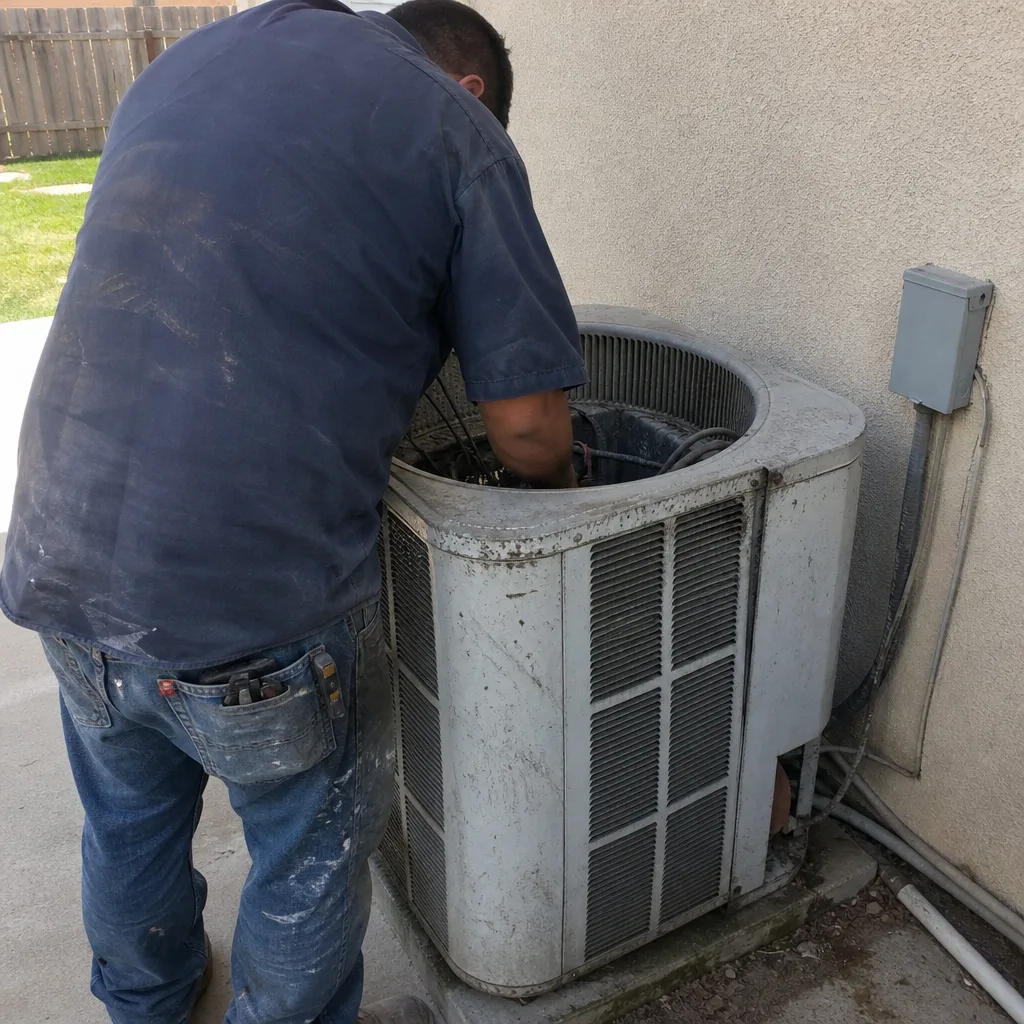
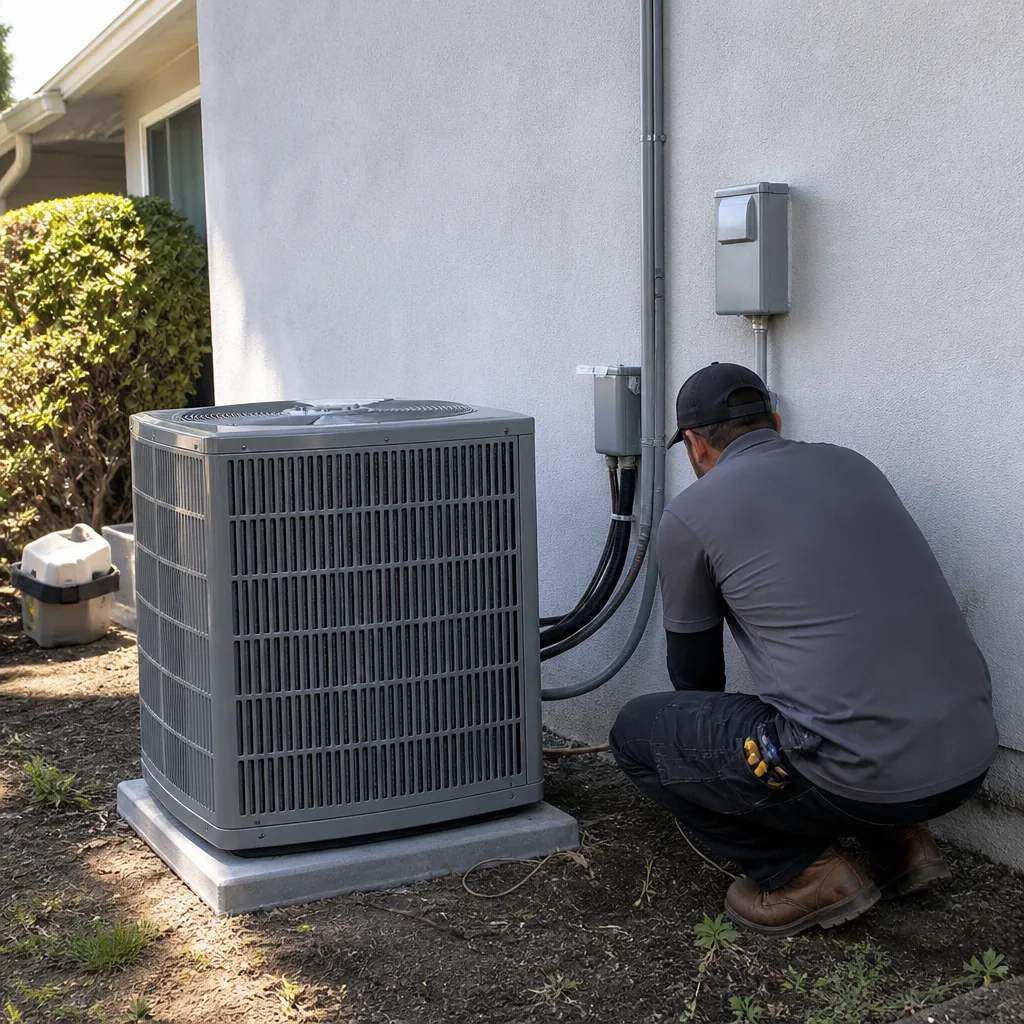
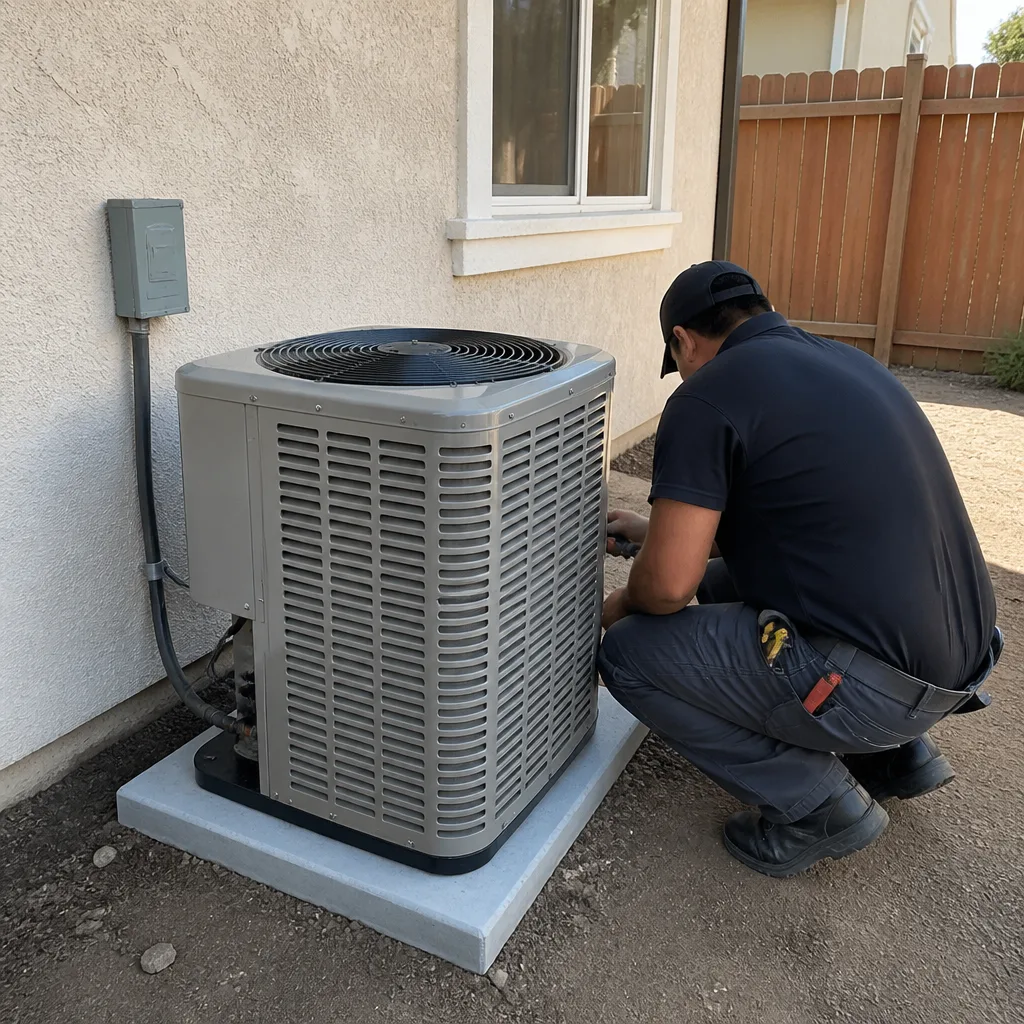
- Hose down the condenser coil twice a year: Turn off the power at the disconnect, then gently spray the outdoor unit’s coil fins with a garden hose. Dust from Fresno’s dry summers and construction activity settles on the coil, and a clean coil runs cooler and uses less energy.
- Clear debris from around the outdoor unit: Leaves, cottonwood fluff, and grass clippings reduce airflow. Keep a clear zone of at least 18 inches around the unit.
- Inspect duct tape and mastic at accessible joints: In attics that reach 150°F, duct tape adhesive fails much faster than in cooler climates. Check visible duct connections in the attic or crawl space for gaps or peeling tape. Leaking ducts can lose 20 to 30% of conditioned air.
- Check the condensate drain line: In a dry climate, the drain line can clog with algae and scale because water sits in it between cycles. Pour a cup of white vinegar down the line every few months to keep it clear.
Any duct modification, system replacement, or major repair requires a licensed HVAC contractor. Filter changes, coil cleaning, and drain line maintenance are homeowner tasks.
Exterior Paint Film Integrity and Stucco Maintenance
Fresno’s sun and heat age exterior paint faster than almost any other climate in the country. South- and west-facing walls take the worst of it, and paint on those exposures often fails within 5 to 7 years, even with high-quality products. Once paint film fails, stucco underneath absorbs water during Tule fog season and rain events, and that’s when you get cracks, efflorescence, and eventual stucco repair bills.
What to inspect, and when:
- South and west walls: Check these twice a year, in spring and fall, for bubbling, cracking, or peeling. The UV on these exposures is relentless, and early paint failure is a signal that the rest of the wall isn’t far behind.
- Stucco hairline cracks: Not every crack is a structural problem, but every crack is a moisture entry point. Hairline cracks under a sixteenth of an inch can be sealed with an elastomeric caulk or patching compound. Wider cracks, or cracks with vertical displacement, need a professional evaluation.
- Efflorescence: The white, chalky deposits on stucco mean water is moving through the wall and bringing salts to the surface. Efflorescence is a symptom, not a disease. Find the water source first, then clean the wall. If you clean it without fixing the water, it comes back.
- Around windows and doors: These are the highest-stress points for stucco because the wall flexes around the openings. Hairline cracks radiating from window corners are common and usually cosmetic, but they should be sealed to keep moisture out of the wall cavity.
If you’re planning a repaint, choose a paint with a high UV-resistance rating. James Hardie siding and trim are increasingly common on Fresno homes for this exact reason: hardie products hold their finish longer under intense sun than wood or standard fiber cement alternatives. We install James Hardie products on many of our exterior projects, and the manufacturer’s warranty follows the finished work, which is a real consideration for homeowners who don’t want to repaint every five years.
What Requires a Licensed Contractor in California vs. DIY Documentation
California law draws a clear line between maintenance a homeowner can perform and work that requires a licensed contractor with a CSLB license. Knowing where that line sits protects you legally, protects your insurance coverage, and keeps your home’s value intact.
Homeowner-legal tasks (with documentation):
- Caulking and sealant replacement
- Gutter cleaning
- Filter changes and condenser coil cleaning
- Weep hole cleaning
- Vapor barrier inspection and small repairs
- Paint touch-up and minor stucco crack sealing
- Drip line adjustments
- Concrete patching with products like Quikrete or Sakrete
For any of these, document what you did, when you did it, and take photos. A maintenance log matters if you ever sell the house, and it matters if you ever need to file an insurance claim. Insurance companies look more favorably on claims when the homeowner can show a track record of maintenance.
Work that requires a licensed California contractor:
- Any structural modification: Moving walls, cutting into load-bearing framing, modifying roof trusses. This includes the removal of a wall between a kitchen and living room, even if it seems simple.
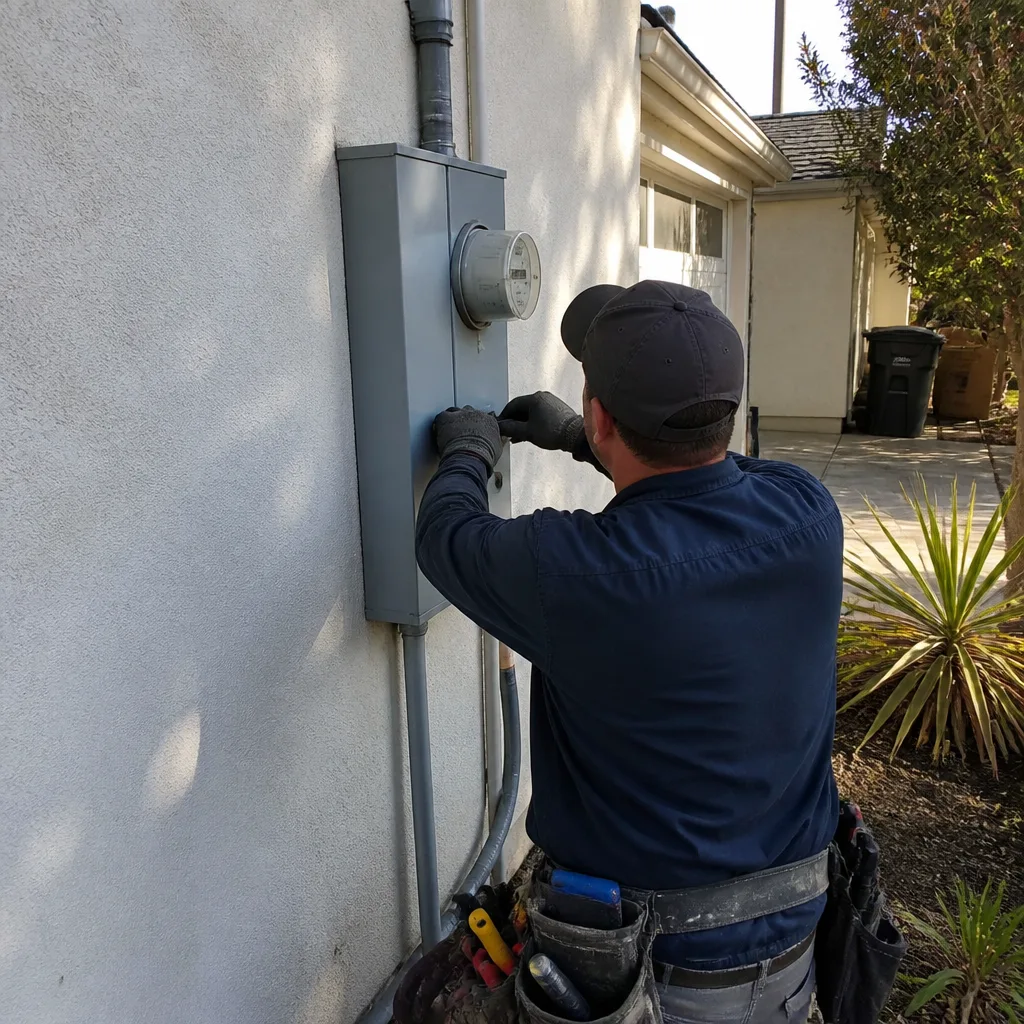
- Electrical work beyond replacing a fixture: Adding circuits, moving outlets, panel work. California requires a licensed electrician for any new circuit or panel modification.
- Plumbing beyond replacing a faucet or toilet: Moving supply or drain lines, installing a new water heater, gas line work. Gas line work is legally restricted to licensed professionals, period.
- Roofing replacement: A full roof replacement or any work that involves structural roof decking requires a licensed roofing contractor. Small shingle repairs are gray area, but anything beyond a few shingles should be done by a professional.
- HVAC replacement or duct modification: Refrigerant handling requires EPA certification, and duct replacement is regulated by California energy codes.
- Stucco repair larger than a small patch: Large stucco repairs involve lath and plaster work that needs to meet California building code. Small cosmetic patches are homeowner-legal, but anything larger than a square foot or two should be evaluated.
If you’re unsure whether a task requires a licensed contractor, call the Contractors State License Board at 1-800-321-CSLB, or ask a licensed contractor directly. We’re happy to answer that question over the phone at Elmstead Remodeling Fresno home services, and the answer doesn’t cost anything.
A Season-by-Season Maintenance Calendar for Fresno
Here’s a consolidated maintenance calendar organized by the seasons that actually exist in Fresno, not the four seasons on a generic template. Use this as a reference, and adjust based on your specific neighborhood and home age.
Spring (March through May):
- Attic inspection: Check ridge vent, soffit clearance, and radiant barrier before the heat arrives.
- Caulk walk: First of two walks this year. Focus on south and west exposures.
- Irrigation start-up: Before turning the system on, check drip line placement around hardscape and foundation. Adjust emitters that have shifted.
- Concrete inspection: Walk all flatwork and mark any new cracks. Photograph and document.
- HVAC pre-summer check: Replace the filter, hose down the condenser coil, and test the system before the first 100°F day.
- Weep hole cleaning: Spring is a good time, before the summer dust settles.
Summer (June through September):
- Monthly filter changes: Every 30 days during peak cooling season.
- Attic temperature spot-check: On a 100°F+ day, check attic temperature if you can do so safely from the access point. If it’s over 150°F, ventilation needs work.
- Walk the exterior at dusk: Check for caulk cracks that opened in the heat. Thermal cycling is most aggressive in July and August.
- Monitor the irrigation system: Look for puddling, runoff, or soil erosion near concrete. Adjust the schedule if needed.
Fall (October through November):
- Second caulk walk: Focus on north and east exposures, plus any joints you flagged in spring.
- Weep hole cleaning: Clean before Tule fog season starts in December.
- Gutter cleaning: After the leaves drop, before the fog and rain. Clogged gutters overflow and splash water onto walls and foundation.
- Crawl space vapor barrier check: Before the wet season begins.
- Exterior paint film inspection: Walk the south and west walls for bubbling or peeling before winter moisture sets in.
- Irrigation shut-down checklist: Drain the lines if freezing is possible, and cap any exposed drip emitters.
Winter (December through February):
- Monthly filter changes continue if you run the heat pump or run the AC on warmer days.
- Tule fog moisture checks: Weekly walkthroughs during fog events, looking for water marks, condensation, or musty smells.
- Roof valley and overhang inspection: Check for water stains after fog cycles.
- Foundation perimeter check: After any significant rain, walk the foundation and look for pooling or soil erosion. Water is your foundation’s enemy, and Fresno’s clay soil holds moisture against the foundation line.
Common Mistakes to Avoid
- Skipping the attic inspection because “it was fine last year.” Fresno’s heat degrades roofing materials cumulatively. A ridge vent that was fine last summer can fail this summer, and the damage compounds quickly at 150°F. Check it every spring and fall.
- Using interior caulk outside. Interior caulk is not UV-resistant and will fail within months. Use a polyurethane or hybrid sealant rated for exterior exposure. The $3 difference in product cost is the cheapest insurance you’ll ever buy.
- Placing drip emitters too close to the foundation or concrete. This is the most common irrigation mistake we see in Fresno. Wet soil expands, and expanding soil against a foundation or concrete edge causes cracks. Keep emitters at least 12 inches away.
- Waiting until you smell must before checking the crawl space. By the time you smell it, the moisture has been present for weeks or months. Check the vapor barrier every fall, and check again after heavy fog or rain events.
- Painting over failed caulk. Paint won’t seal a caulk joint. The caulk needs to be removed and replaced first, then painted. This is a shortcut that leads to water getting behind the paint film.
- Assuming a settled concrete slab is a concrete problem. Settlement is usually a soil or drainage problem. Patching the concrete without fixing the water or soil issue means the patch will fail and the slab will keep settling.
- Not documenting maintenance work. Photos and a simple log matter for insurance claims, resale, and warranty work. A homeowner who can show ten years of documented maintenance is a homeowner an insurance adjuster takes seriously.
See the difference
 Before
 After
After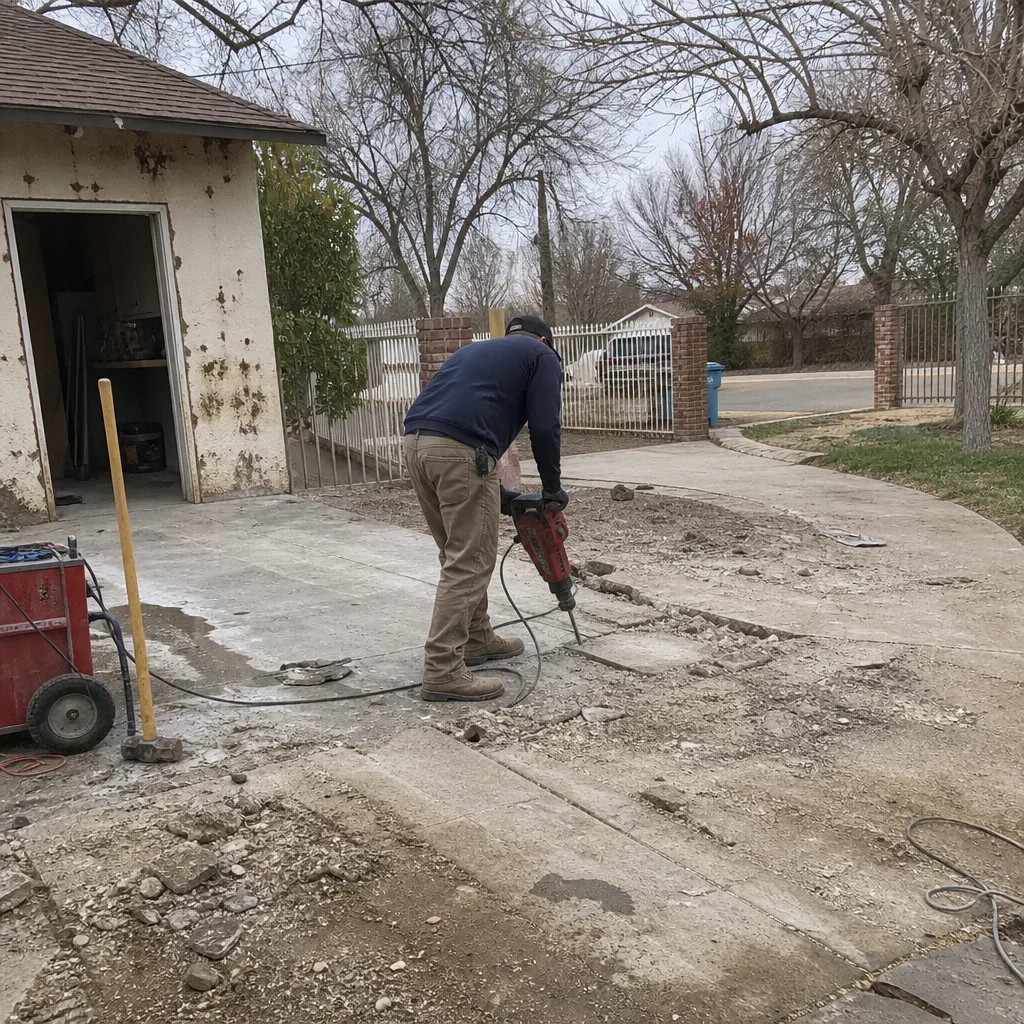 Before
 After
After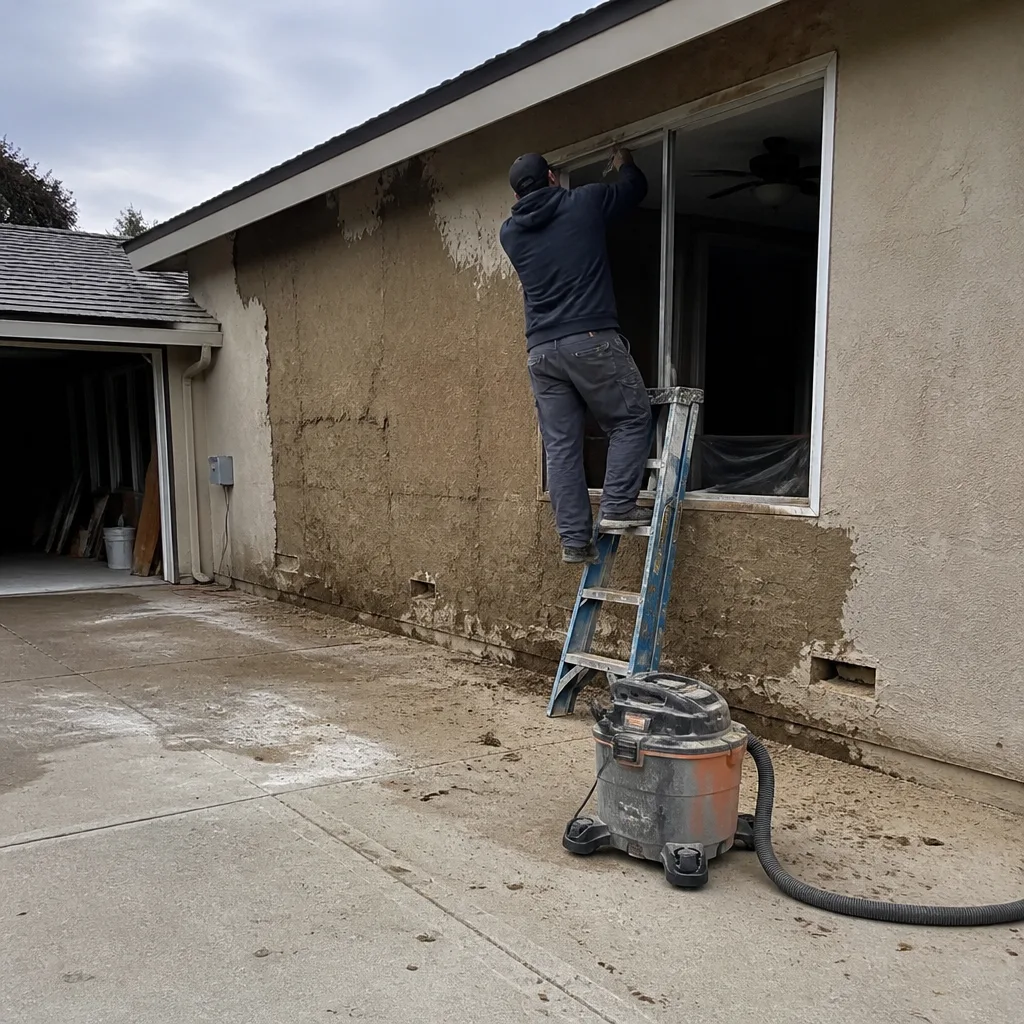 Before
 After
AfterWhen to Call a Professional
Some maintenance findings are signals to stop and call a licensed contractor rather than attempting a fix. If you find a stucco crack wider than a sixteenth of an inch with vertical displacement, a foundation crack that’s growing, a roof leak that appears during or after fog events, a concrete slab that has settled more than half an inch, or a crawl space with standing water, call a professional. These are structural and moisture issues that require a trained eye and often a repair plan that involves permits. Bathroom Remodeling in Fresno and Kitchen Remodeling in Fresno projects often reveal underlying maintenance issues that the homeowner didn’t know existed, which is one reason we recommend an inspection before any major remodel. If you’re not sure whether something you found needs professional attention, Elmstead Remodeling Fresno offers free estimates in Fresno. Call (559) 540-8453 and describe what you’re seeing. If we can tell you it’s a DIY fix over the phone, we will. If it needs a professional, we’ll give you an honest assessment and a written price before any work starts.
Frequently Asked Questions

Twice a year, in early spring and early fall. Fresno’s attic temperatures reach 150°F in summer, which degrades roofing adhesives and caulk seals faster than in cooler climates. A spring check prepares you for summer heat, and a fall check catches any damage the summer caused.
Neglected attic ventilation is the most expensive failure we see, because it causes cascading damage: shingle curling, caulk failure, duct tape degradation, and eventually roof decking damage. The fix is usually inexpensive if caught early: clearing soffit vents or replacing a ridge vent. The repair is expensive after the damage spreads. Call (559) 540-8453 if you suspect attic ventilation issues, and we’ll assess it honestly.
In Fresno, yes. The city’s UV index and thermal cycling break down exterior caulk roughly twice as fast as in coastal climates. A twice-yearly walk, once in spring and once in fall, catches failures before water gets behind the caulk and into the wall cavity.
Small hairline cracks under a sixteenth of an inch can be sealed with an elastomeric caulk or patching compound as a homeowner task. Cracks wider than that, or cracks with vertical displacement, need a professional evaluation. Stucco repair is one of those tasks where the difference between cosmetic and structural is subtle, and getting it wrong means water intrusion.
Check the irrigation system first, even if it’s been rainy. Drip emitters that ran all summer may have kept the soil saturated, and the rain simply revealed the existing problem. Redirect any emitters within 12 inches of the foundation, and if pooling continues, call a licensed contractor to evaluate drainage.
Any structural modification, electrical work beyond fixture replacement, plumbing beyond fixture replacement, or roofing beyond minor repairs requires a permit and a licensed contractor in California. If you’re unsure, call the Fresno city building department or ask a licensed contractor. We answer this question regularly, and the answer doesn’t require a site visit. Estimates are free. For help finding the right professional, see our How to Hire a Construction Contractor in Fresno: A Step-by-Step Guide.
The Bottom Line
Fresno’s climate demands a maintenance schedule built for 110°F roof surfaces, dust-storm caulk erosion, drip-system runoff, and Tule fog moisture. The generic annual checklist doesn’t match how this city actually treats a house. Twice-yearly attic inspections, twice-yearly caulk walks, irrigation-adjacent hardscape checks, and fog-season moisture walks will prevent the most expensive repairs we see, as detailed in our Seasonal Construction Care for Fresno: Year-Round Homeowner’s Guide. Document your work, know which tasks are legally yours, and call a licensed contractor when the finding is structural, electrical, plumbing, or roofing-related. A well-maintained Fresno home isn’t a lucky home. It’s a home with a schedule, and the schedule is written for the climate, not for a national template.
Written by Graham Stein, Owner at Elmstead Remodeling Fresno, serving Fresno since 2005.