Last updated October 15, 2026








Free written scope consultation - allowances, timeline, and change-order rules on paper before a single trade is scheduled
Construction Warning Signs: A Fresno Homeowner’s Reference Guide
The most reliable warning sign that a remodeling project will go wrong is not a bad review online. It’s a contractor who presents a price verbally and asks for a large upfront cash deposit before any written agreement exists. That pattern precedes the majority of contractor fraud complaints filed with California’s Contractors State License Board, and it happens in Fresno neighborhoods every month. This guide names the specific signals, in the contract, on the job site, and in a contractor’s behavior, so Fresno families can recognize a project heading toward trouble before money changes hands.
Quick Answer
A contractor warning sign is any behavior, document pattern, or job site practice that signals a Fresno remodeling project is likely to go over budget, miss deadlines, produce substandard work, or leave the homeowner without legal recourse. The most serious signs appear before work begins: no written price, no license verifiable on the CSLB website, a demand for large cash deposits, and contract language that removes fixed-price protections. For a deeper look at how to evaluate these early red flags, see our How to Hire a Construction Contractor in Fresno: A Step-by-Step Guide. Secondary signs show up during the project, from uncontained dust to change orders that arrive only after demolition exposes the walls.
Styles & brands we work with
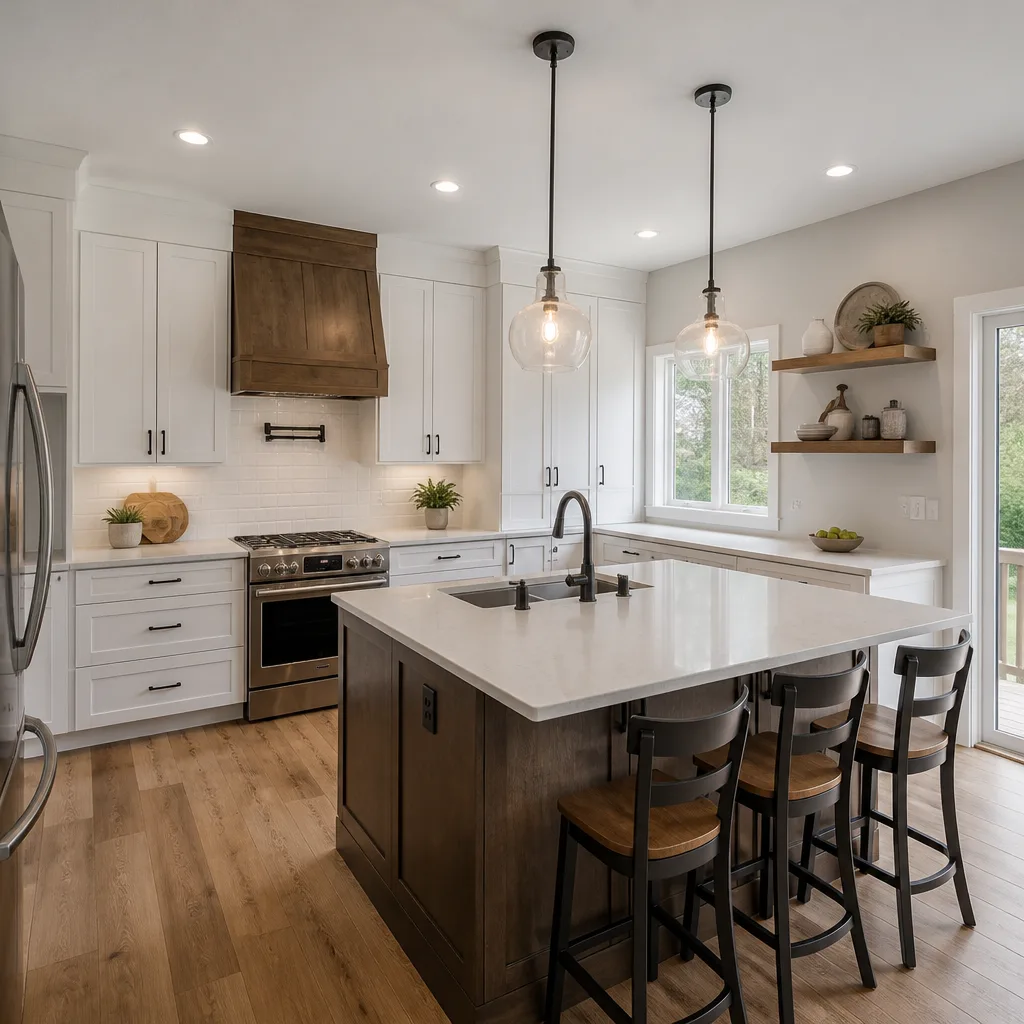






Table of Contents
- Contract Red Flags: The Phrases That Remove Your Legal Protections
- The Unlicensed Contractor Detection Checklist
- Job Site Behavior: What a Contractor Who Respects Your Home Actually Does
- Change Order Warning Patterns: Legitimate Discovery vs. Habitual Scope Creep
- Materials and Pricing: When ‘Trust Me’ Replaces a Named Brand
- Post-Project Red Flags: What a Warranty Callback Reveals
- Fresno-Specific Warning Signals: Climate, Permits, and Local Patterns
- What a Healthy Remodeling Project Looks Like From Day One
Contract Red Flags: The Phrases That Remove Your Legal Protections
A remodeling contract in California is not a formality. It is the document that defines what a contractor legally owes you, and the language inside it determines whether you keep any leverage if the work goes sideways. In our experience reviewing projects across Fresno, from Fig Garden to Woodward Park to Tower District, the same problematic phrases appear again and again. They are written to sound reasonable. They are not.
Here are the phrases that should stop a Fresno homeowner from signing anything:
- “Estimate may change based on actual conditions.” This phrase converts a fixed-price contract into an open-ended one. It gives the contractor permission to raise the final bill after the work begins, with no new agreement required from you. A legitimate contract defines the scope precisely and lists the specific conditions under which a price adjustment applies, such as discovering rotted framing that no inspection could have revealed.
- “Materials to be determined.” This allows the contractor to select the cheapest available materials after you have signed, regardless of what was discussed. You lose the ability to hold them to a specific brand or quality grade. If you agreed on KraftMaid cabinets or Kohler fixtures, those names belong in the contract, with model numbers where possible.
- “Payment due upon completion at contractor’s discretion.” This removes the milestone-based payment schedule required by California law for home improvement contracts. The contractor decides when the job is “complete,” and you have no objective standard to dispute it. A proper contract ties payments to defined milestones, like rough-in inspection passed, drywall hung, or final walkthrough signed.
- “Owner responsible for obtaining permits.” In Fresno, as in most California cities, the contractor performing the work should pull the permit under their license. Shifting that responsibility to the homeowner is a way to avoid the inspection process and the liability that comes with it. It also means unpermitted work that can complicate a future sale of the home.
- A deposit exceeding 10% or $1,000, whichever is less. California law caps the down payment on a home improvement contract at 10% of the total project price or $1,000, whichever is smaller. Any contractor asking for more is violating state law before the first hammer swings. That violation is the clearest signal you will get about how the rest of the project will go.
These phrases are the contract equivalent of a check-engine light. Alone, one might be explained away. Three or four together describe a contractor who has learned exactly how much legal ambiguity the state of California will tolerate, and who intends to use every inch of it.
Before you review any contract, read our guide on what a general contractor in Fresno should include in a written agreement. A legitimate contractor puts the price in writing before any work starts. Every time.
The Unlicensed Contractor Detection Checklist
Fresno’s housing stock ranges from mid-century ranches in Fig Garden to new construction in the northwest growth areas. That range creates a steady supply of homeowners who need work done, and a parallel supply of unlicensed operators who know how to find them. The California Contractors State License Board publishes enforcement actions regularly, and Fresno appears in them often enough that the pattern is worth naming plainly.
Here is the detection checklist, step by step:
- Get the license number before any money is discussed. A licensed California contractor has a six-digit number that begins with the number “1” for sole proprietors, “3” for corporations, or “7” for LLCs. If the person cannot produce it from memory or from the side of their truck, that is your first answer.
- Run the number on the CSLB website at cslb.ca.gov. The lookup tool shows whether the license is active, whether it has been suspended, and whether any disciplinary actions are pending. It also shows the license holder’s name, which should match the person standing in your kitchen. A license that belongs to someone who is not on your job site is not a license for your job.
- Verify the classification. California issues different license classes for different scopes of work. A “B” license covers general building. A “C-36” covers plumbing. A “C-10” covers electrical. A contractor holding a B license who says they will handle the electrical work on your Fresno kitchen remodel should be subcontracting to a C-10, not doing it themselves in the evening.
- Ask for a certificate of insurance, then check the dates. The certificate should name the homeowner as additionally insured and show workers’ compensation coverage. A lapsed policy prints just as easily as a current one, so call the insurer or check the policy number against the carrier’s verification system if anything looks faded, edited, or photocopied beyond legibility.
- Listen for the “brother’s license” line. “I work under my brother’s license” or “my cousin runs the company but I do the work” is never acceptable. California law requires that the person performing the contracting work hold the license, not have a relative who does. This phrase is a confession of unlicensed operation, regardless of how it is dressed up.
If the contractor you are considering cannot pass all five steps, the project has not started, and you have already found the warning sign that matters most. The remaining question is simple: what else will not check out once the work is underway?
For families weighing a larger project, our Elmstead Remodeling Fresno home page explains what a licensed, insured contractor should be able to show you before your first meeting ends.
Job Site Behavior: What a Contractor Who Respects Your Home Actually Does
A crew’s behavior at the end of a workday tells you more about a contractor’s operational discipline than any portfolio photo ever will. The gap between what a professional crew does and what a careless one does is visible in about thirty seconds, if you know what to look for. In Fresno, where summer dust is constant and valley wind pushes construction debris against fences and into pools, containment and cleanup are not courtesies. They are the difference between a project that respects a family’s daily life and one that treats the house as a job site first and a home never.
Here is what a contractor who respects your Fresno home actually does at the end of each workday:
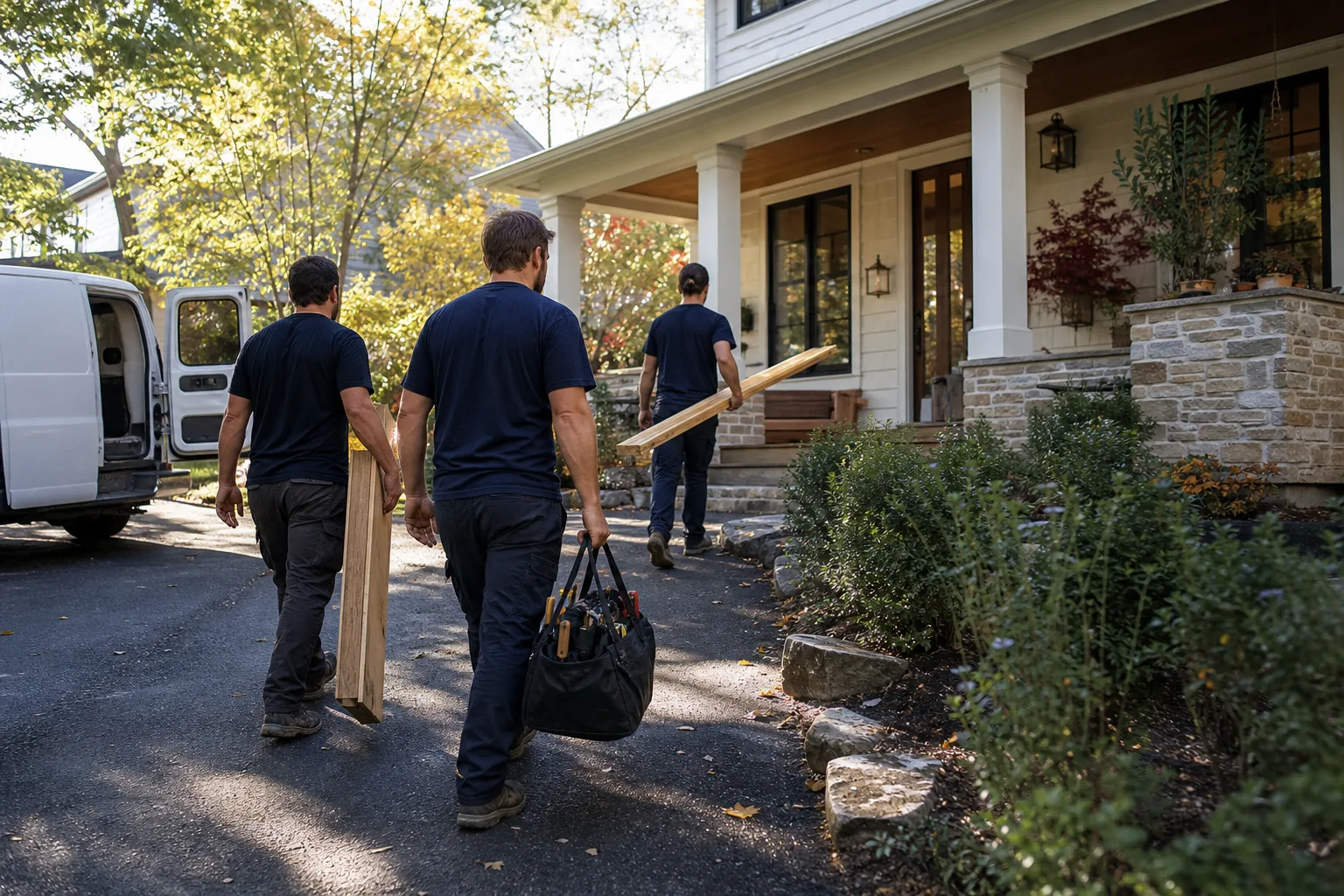
- Drop cloths and shoe covers stay in place from arrival to departure. A crew that walks through your living room in work boots to reach the bathroom at the back of the house is a crew that does not see your floors as something to protect. Shoe covers at every entry point and drop cloths on the traffic path are basic containment, not an upsell.
- Tools and materials are consolidated before the crew leaves. Loose fasteners left on a counter, a saw sitting on the lawn, or an extension cord stretched across a hallway overnight are signals. They say the crew will organize the site when it is convenient, not before they leave, and that “good enough” is the standard.
- Dust barriers are in place where cutting or sanding occurs. In Fresno’s climate, drywall dust and wood sanding particles travel fast through a house with open windows. A contractor who does not seal off the work area with plastic or dust barriers is deciding, silently, that your family can live with the dust. A professional decides the opposite.
- The site is photographed before the crew leaves. This is not a vanity practice. A photo of the cleanup provides a record the homeowner can verify, and a contractor who does it willingly is demonstrating that they expect to be held to the condition of the home, not just the finished project.
- Quiet hours are honored, not negotiated. A contractor working in a Fresno home with a napping toddler should not be running a tile saw at 1:00 p.m. if the homeowner has asked for quiet hours. The contractor who respects that request, and builds the schedule around it, is telling you that your family’s routine is part of the job scope. The contractor who “forgets” is telling you something else.
Deviation from basic containment and cleanup reveals operational discipline more clearly than any promise. A contractor who will not protect the floors before work starts will not protect the workmanship during it. The two behaviors come from the same habit.
For a closer look at how a professionally run project handles the daily realities of a family home, see our guide to bathroom remodeling in Fresno, where we walk through what containment, dust control, and end-of-day cleanup should look like on a real project.
Change Order Warning Patterns: Legitimate Discovery vs. Habitual Scope Creep
Every remodeling project has unknowns behind the walls. In Fresno homes built before 1980, opening a bathroom wall can reveal cast iron drain pipes that have corroded, or framing that termites worked through decades ago. Those are legitimate unforeseen conditions. A contractor who discovers them, documents them with photos, explains the fix, and prices the additional work in writing before touching it is doing their job correctly.
The contractor who “discovers” scope additions after demolition is underway follows a different pattern. Here is how to tell the difference:
- Legitimate discoveries come with documentation. When a contractor opens a wall and finds rotted framing, a professional takes a photo and walks the homeowner through what they are seeing. The change order includes the photo, the specific problem, the fix, and the price. A contractor who describes problems verbally, with no photo and no written description, is asking you to buy something you cannot see.
- Legitimate discoveries are specific. “The floor joists under the tub are rotted and need to be sistered” is a real finding. “There are some structural issues we need to address” is not. Vagueness in a change order is a warning sign that the problem, and the price, will be defined later, at the contractor’s convenience.
- Habitual scope creep arrives in clusters. One legitimate change order on a project is normal. Three change orders in the first week, each “discovered” after the previous one was approved, describes a contractor who underbid the job and is rebuilding the price after you are committed. In Fresno, where remodeling demand is strong, this pattern is a known pressure tactic.
- Legitimate contractors do not start the work before the change order is approved. A contractor who says “we went ahead and started fixing that rotted framing while we were in there” has made a financial decision on your behalf. They are counting on the sunk-cost feeling that comes when work is already partly done. The professional gives you the price first, every time.
The tell is not in any single change order. It is in the pattern. A contractor who arrives with a written price, handles the first unforeseen condition with photos and a clear explanation, and asks for your approval before proceeding is operating normally. A contractor whose change orders start flowing the moment the first wall comes down is operating on a plan, and you are not in it.
Materials and Pricing: When ‘Trust Me’ Replaces a Named Brand
One of the clearest warning signs in a Fresno remodeling proposal is the absence of specific product names where specific products matter. When a contractor will not commit a brand name to paper, the reason is rarely that they have not decided. The reason is that they want the flexibility to use whatever is cheapest on the day they buy it.
A written price with named materials protects you in ways a verbal promise cannot:
- Cabinet brands carry verifiable quality and warranties. A contractor who specifies KraftMaid or Wellborn cabinets has committed to a product you can research, with a manufacturer warranty that travels with the finished kitchen regardless of the contractor. A contractor who writes “quality cabinets” has committed to nothing you can verify.
- Countertop materials differ fundamentally. Cambria and Silestone quartz are engineered to specific tolerances, and their pricing is published. “Stone countertops” could mean a remnant slab from a yard in Clovis, with no warranty and no consistency. The difference matters in a Fresno kitchen that will see daily use.
- Plumbing fixtures are a common downgrade point. A contractor who specifies Kohler or Moen faucets and shower trim has given you products with lifetime warranty support. A contractor who installs “quality fixtures” from the supply house’s budget aisle has not. When the cartridge fails in year three, you will learn which one you bought.
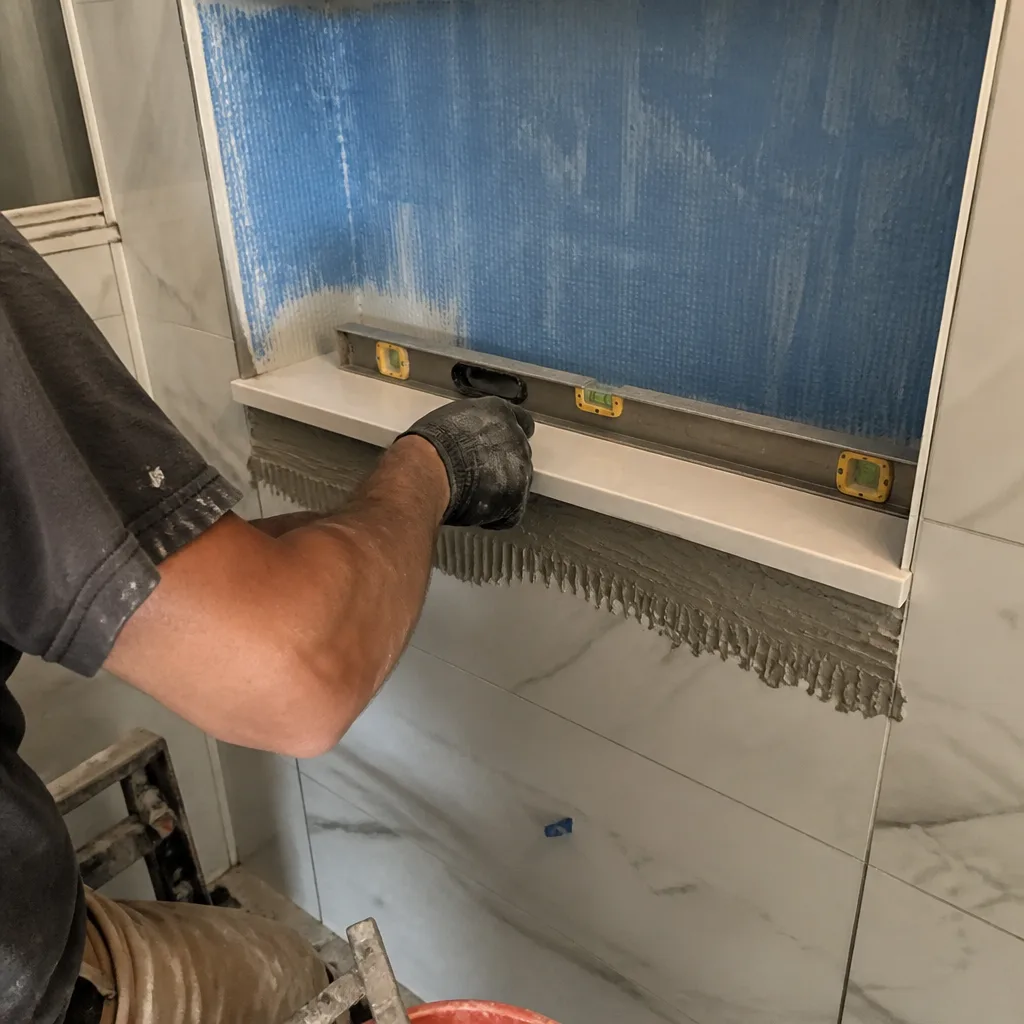
- Waterproofing systems matter more in bathrooms than any visible finish. A contractor who specifies Schluter waterproofing membrane for a shower rebuild is telling you they build to prevent leaks, not just to pass inspection. A contractor who says “we waterproof it” without naming the system is leaving the most failure-prone part of a Fresno bathroom remodel to their mood on the day.
The price itself should be written, complete, and fixed before any work starts. No ranges, no “depending on what we find,” no allowance figures with vague qualifiers. A fixed written price is the single most reliable predictor of how the rest of the project will be run. It says the contractor measured, planned, and decided. Everything else is a bet.
Kitchen remodeling in Fresno projects are where material substitution causes the most expensive surprises, because cabinet, countertop, and fixture costs represent the majority of the project budget. Our written proposals name the products, the models where it matters, and the price that will not change.
Post-Project Red Flags: What a Warranty Callback Reveals
A contractor’s response to a warranty call tells you more about their long-term accountability than anything they said during the sales process. Most contractors are pleasant when they are trying to win the job. The measure of character is what happens six months later, when a cabinet door has drifted out of alignment or a grout line has cracked and the contractor has already been paid.
In our experience in Fresno, the patterns are consistent:
- The vanishing contractor. You call, you leave a message, you text, you call again. The contractor who answered on the second ring during the estimate phase now takes a week to return a call about a warranty issue. This is not a scheduling conflict. It is a verdict on how the original work was planned.
- The re-priced fix. The contractor acknowledges the problem but explains that warranty coverage “doesn’t really apply to this specific situation” and offers to fix it for an additional charge. This is a contractor who views the warranty as a closing tool, not a commitment. Ask them to point to the specific exclusion in the written warranty. Usually there is no written warranty to reference.
- The blame-shift. The contractor explains that the cracked tile was caused by the home shifting, the grout failure was caused by the homeowner’s cleaning products, or the cabinet hinge was overtightened by a family member. While some of these explanations are occasionally true, a professional investigates before assigning blame, and a professional with a real workmanship commitment fixes the problem first and argues about the cause later.
- The quick fix that does not hold. The contractor sends someone out who applies a fast patch and leaves. The problem returns in six weeks. This describes a contractor who is managing warranty costs, not honoring warranty obligations. They are betting you will eventually stop calling. Many homeowners do.
The contrast is a contractor who keeps a written post-project commitment. Not a verbal promise, but a documented standard: if it is not done right after the job is complete, the contractor makes it right. That is the language of a warranty with actual teeth, and it is the difference between a contractor who stands behind their work and one who stands in front of their voicemail.
Fresno-Specific Warning Signals: Climate, Permits, and Local Patterns
Fresno’s climate and regulatory environment create warning signs that a generic remodeling guide will never mention. Knowing them gives a Fresno homeowner an advantage that a contractor from outside the area may not have either.
Here are the signals specific to the Fresno market:
- A contractor who does not mention summer heat in the project schedule. Fresno regularly sees weeks above 100 degrees from June through September. That heat affects paint cure times, adhesive setting, and exterior work schedules. A contractor who plans a full exterior paint schedule for mid-July with no accommodation for temperature either does not know the Central Valley or does not care. Both are problems.
- A contractor who is new to Fresno’s permit process. The City of Fresno’s Building and Safety Division has specific requirements for inspections, plan submittal, and field changes. A contractor who has not worked in the city before and cannot name their contact at the building department is about to learn on your project. That learning curve will cost you time, and possibly a failed inspection or two.
- Removal of trees near a project without discussion. Fresno’s tree canopy, especially in the older neighborhoods around the Tower District and Fig Garden, is protected in many cases. A contractor who removes a mature tree as part of “site preparation” without a permit conversation is exposing you to city penalties and neighbor complaints.
- Foundation movement discussion that never mentions Fresno’s soil. The Central Valley’s expansive clay soil causes real foundation movement in older homes. A contractor who blames every crack on “settling” without mentioning soil conditions is not diagnosing anything. They are deflecting. A contractor who knows Fresno homes can tell you the difference between cosmetic cracking and structural movement, and will direct you to the right engineer when needed.
- Vague language about wildfire-hardening upgrades. Homes in the foothill and wildland-urban interface areas of eastern Fresno County face evolving requirements for exterior materials and defensible space. A contractor who says “we’ll take care of whatever the county requires” without naming the specific requirements is guessing. The requirements are specific, published, and changing. Know them before you sign.
Fresno’s remodeling market is active, and the good contractors are busy. The warning signs above are not about scarcity or urgency. They are about competence. A contractor who has worked in Fresno for years will volunteer this information without being asked. A contractor who has not will learn that volunteerism is the first skill to develop.
What a Healthy Remodeling Project Looks Like From Day One
Warning signs are easier to recognize when you know what their absence looks like. A healthy remodeling project in Fresno, run by a contractor who respects the family living through it, follows a predictable shape from the first meeting to the final walkthrough. Here is that shape, named specifically.
The written price comes before the work starts. Not a range, not an estimate with weasel words, not a verbal number shared over the phone. A written price, delivered in a document you can hold, with a defined scope of work and named materials. This is not a premium feature. It is the baseline service level.
The crew introduces themselves and respects the home’s boundaries. Shoe covers go on at the door without being asked. Drop cloths cover the traffic path. The crew asks before moving a family photo from a shelf or relocating a dog bed. These behaviors signal a contractor who has thought through what it means to work in an occupied home with children and pets.
Quiet tools are used during family rest hours where possible. A contractor building around a toddler’s nap schedule is not slowing down the project. They are sequencing the loud work around the quiet hours. It costs nothing except planning, and it is the single clearest signal that the contractor sees your family as part of the job.
A photo of the cleanup is provided at the end of each workday. This is proof, not trust. A contractor who documents their own cleanup is inviting you to verify it. The families we work with in Fresno tell us this single practice builds more confidence than any portfolio.
The 365-day commitment is written, not assumed. A contractor who names a post-project promise, in writing, with a defined duration, is treating the relationship as ongoing. The job ends. The accountability does not. That is the difference between a contractor who wants your next project and one who is hoping you never call again.
This is the standard the Cedarwell Care Promise sets for every project. Clean up like it is our own home. Ask before moving or touching anything. Respect the family’s time and quiet hours. Explain the price before the work. Each element exists because the absence of it is a warning sign someone else should have caught.
Common Mistakes to Avoid
- Accepting a verbal price as “close enough” to a written one. A verbal price is an opinion. A written price is a commitment. In a Fresno remodeling market where demand is high, the contractor who will not write the price down is telling you they do not want to be held to it.
- Assuming a truck with a logo means a licensed business. Anyone can letter a truck in Fresno for under a hundred dollars. The logo proves nothing. The CSLB lookup proves everything.
- Paying for materials directly from the contractor’s supplier “to save money.” This removes the contractor’s accountability for the materials and inserts you into a purchase chain you do not belong in. A professional contractor purchases materials and passes them through the project contract, not around it.
- Skipping the permit because the contractor says it will “slow things down.” The permit exists to protect you, and in the City of Fresno, unpermitted work becomes your problem when the house is sold. A contractor who avoids permits is avoiding inspections. There is a reason.
- Hiring the first contractor who can start immediately. In a busy Fresno market, the good contractors have a schedule. The contractor who is available tomorrow is available tomorrow because no one else is calling them for next month. Ask yourself why.
- Accepting a change order verbally during the project. “Go ahead and take care of it, we’ll figure out the price later” is the most expensive sentence in remodeling. Written change orders, with a defined price and your signature, before the additional work starts. It is the only habit that holds.
See the difference
 Before
 After
After Before
 After
After Before
 After
AfterWhen to Call a Professional
You should call a professional remodeling contractor when the project involves plumbing, electrical systems, structural changes, or any work regulated by the City of Fresno’s building code. Keeping a General Contractor Maintenance Checklist for Fresno Homeowners on hand helps ensure nothing gets overlooked during vetting. You should also call a professional when the scope is large enough that a mistake would be expensive to undo, which describes most kitchen and bathroom renovations. And you should call a professional when the contractor you are considering has failed any part of the checklists in this guide, because a second written estimate from a contractor who passes them will show you exactly what you were about to miss. Elmstead Remodeling Fresno offers free estimates in Fresno, with a written price before any work starts. Call (559) 540-8453 to schedule yours.
Frequently Asked Questions

The biggest warning sign is a contractor who asks for a cash deposit above the California legal cap of 10% or $1,000 before providing a written contract with a defined scope and price. This pattern precedes the majority of contractor fraud complaints filed with the CSLB, and it is the single most reliable predictor of a project that will end in dispute.
Visit cslb.ca.gov, enter the contractor’s six-digit license number or business name, and verify that the license is active, held by the person you are talking to, and classed for the work being performed. A B license covers general building, while specific trades like electrical and plumbing require C-classifications. Call (559) 540-8453 if you would like help reviewing a license before you sign.
A Fresno remodeling contract should include a written fixed price, a defined scope of work with named materials, a milestone-based payment schedule with no payment exceeding the work completed, the contractor’s license number, a start and completion date, and a written workmanship warranty. California law requires most of these elements for home improvement contracts, and their absence is a warning sign in itself.
California law caps the down payment on a home improvement contract at 10% of the total project price or $1,000, whichever is less. Any contractor asking for more is violating state law. A professional contractor follows this cap because they finance their own operations and do not need your deposit to buy materials.
A legitimate change order is documented with photos, describes a specific problem that could not have been known before the work began, includes a written price, and requires your approval before the additional work starts. A scam change order is vague, follows immediately after demolition, and arrives with the work already underway. The difference is documentation and timing.
Most bathroom remodels in Fresno that involve plumbing changes, electrical work, or structural modifications require a permit from the City of Fresno’s Building and Safety Division. A contractor who says a permit is unnecessary is usually trying to avoid the inspection process. The permit protects you, and it protects the future sale of your home.
The Bottom Line
The warning signs that a Fresno remodeling project is heading toward a bad outcome are visible before the work starts, if you know what to look for. They live in the contract phrases that remove your legal protections, the license that will not verify, the job site that is left unprotected at the end of a workday, and the change orders that start flowing after demolition. The antidote is written, every time: a written price, written materials, written change orders, written cleanup documentation, and a written post-project commitment. A contractor who puts it in writing is a contractor who plans to be held to it. That is the standard every Fresno family should expect, and the one a professional contractor will meet without being asked. Explore more guides & resources on hiring, contracts, and protecting your home investment.
Written by Graham Stein, Owner at Elmstead Remodeling Fresno, serving Fresno since 2005.