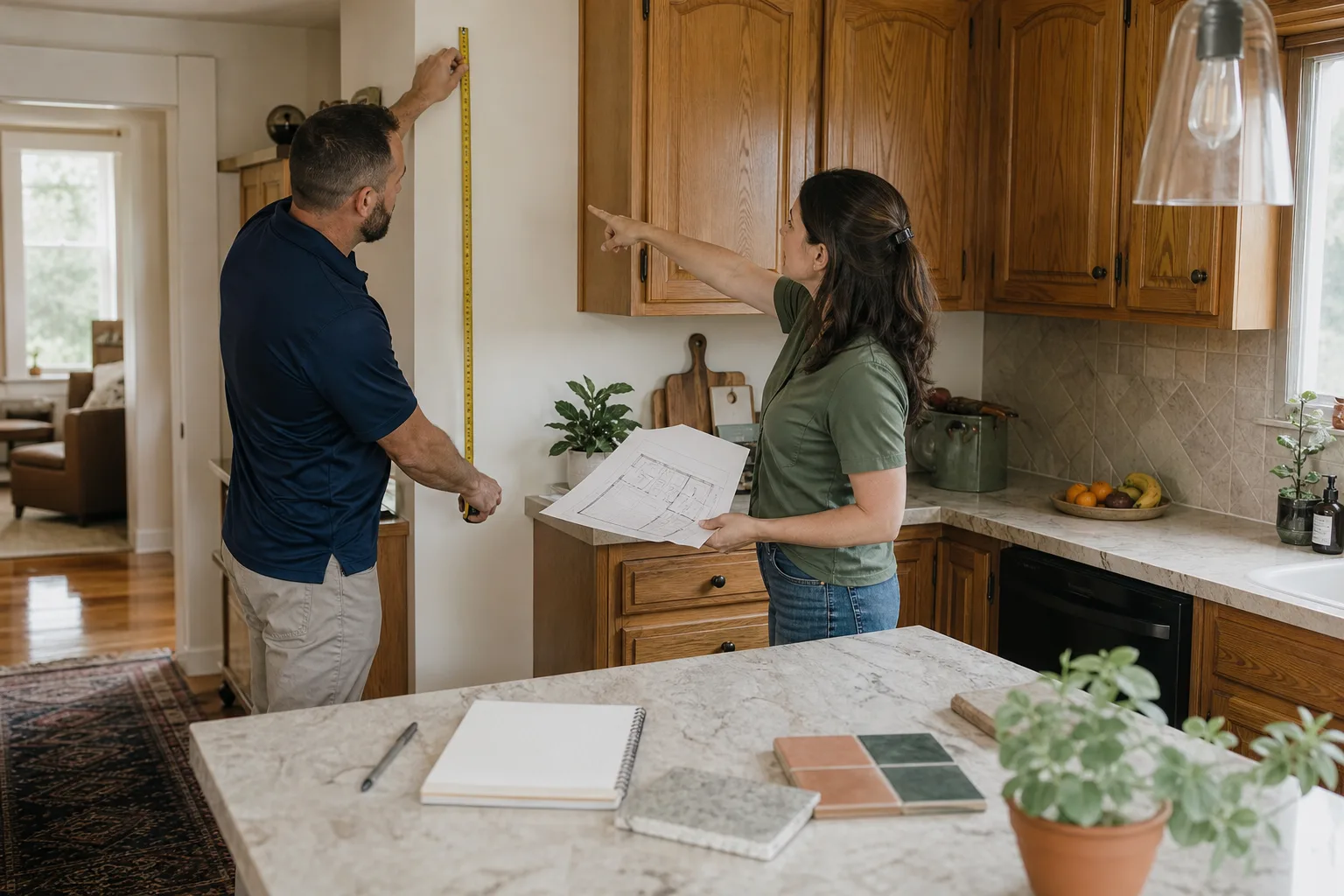
Free written scope consultation - allowances, timeline, and change-order rules on paper before a single trade is scheduled
American Standard Driveway & Pavers: The Fresno Owner’s Guide
We stock and install American Standard-compatible driveway and paver materials across Fresno, with most paver driveway installations running between $7,000 and $18,000 depending on square footage, base condition, and paver style. The way most homeowners discover their driveway has failed is slow, then sudden: a low spot that held water all winter finally sinks, a corner paver pops loose under a garbage bin wheel, or a section shifts after the first real rain of October. By the time you notice it from the driveway apron, the base underneath has usually been settling for a season or two.
If you’re standing in your driveway right now looking at a crack, a dip, or a row of pavers that has wandered out of line, this page tells you what’s actually going on underneath, what it costs to fix in Fresno, and whether it’s a repair or a replacement. We’ll walk through it the way we’d talk through it if we were standing in your driveway with you.
Which American Standard Models This Applies To
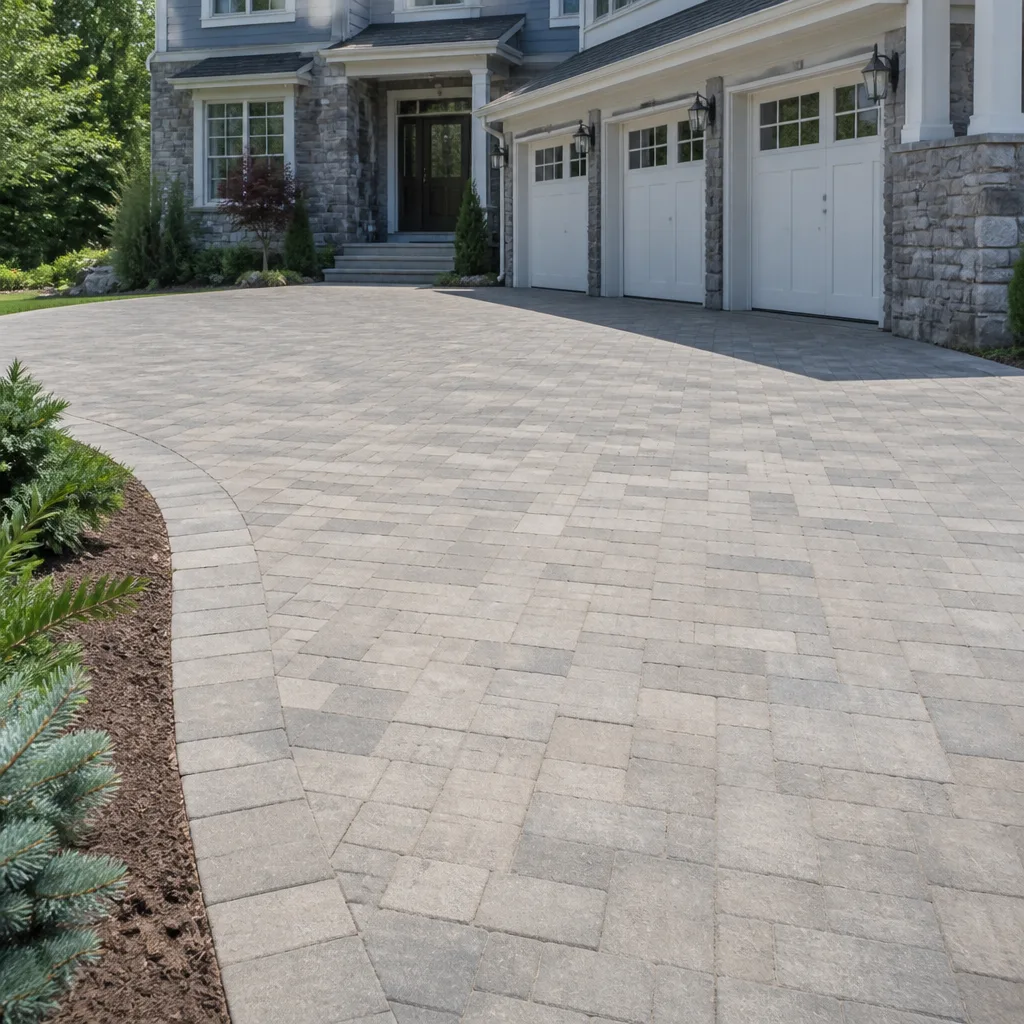
American Standard’s driveway and paver product line splits into two families: their interlocking concrete pavers and their permeable paver systems. The interlocking pavers come in three thicknesses, 60mm for pedestrian areas, 80mm for residential driveways, and 100mm for commercial or heavy-vehicle traffic. The permeable pavers are wider-spaced with aggregate fill joints and are the product line most Fresno homeowners ask about after a drainage problem surfaces, because they let water drain through rather than sheet across the surface toward the garage.
The compatibility gotcha we see most often in Fresno is this: American Standard 80mm pavers are not interchangeable with their 60mm counterparts in the same pattern. The height difference means a mixed installation will never sit flush, and the 80mm units have a slightly different edge profile. If you’re matching an existing section, measure the paver thickness at a clean edge before ordering anything. Another thing to check is the mold code stamped on the underside. American Standard runs multiple production lines, and pavers from different molds can vary by up to 2mm in dimension, which is enough to create visible pattern drift over a 40-foot driveway run in Clovis or northeast Fresno.
For OEM versus aftermarket: American Standard’s own pavers carry their manufacturing warranty, which matters if you’re ever selling the home and the buyer asks. Quality aftermarket pavers from established manufacturers meet the same ASTM C936 standards for compressive strength and water absorption, and they typically cost 10 to 20 percent less. We stock both and will give you a written line-item price on each option before you decide, so you’re comparing actual numbers rather than a vague “we can get you something cheaper.”
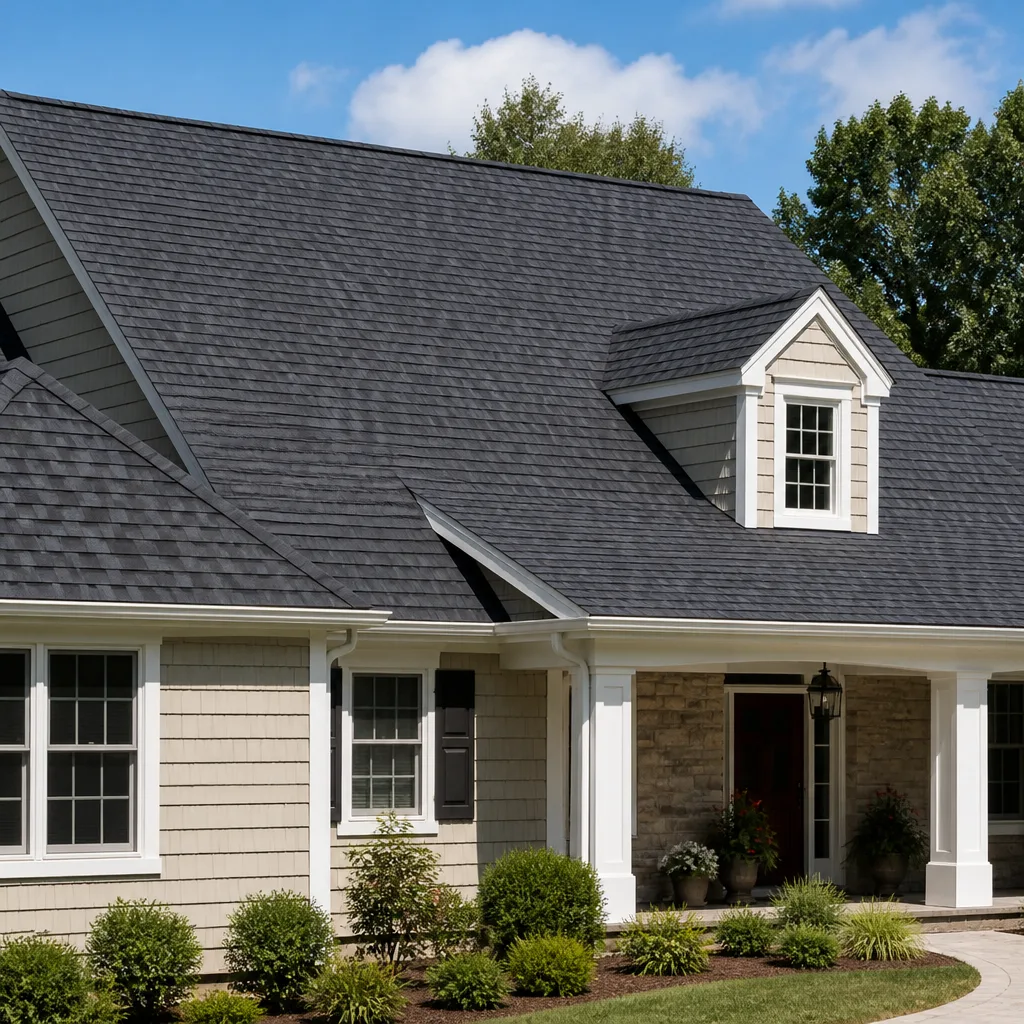
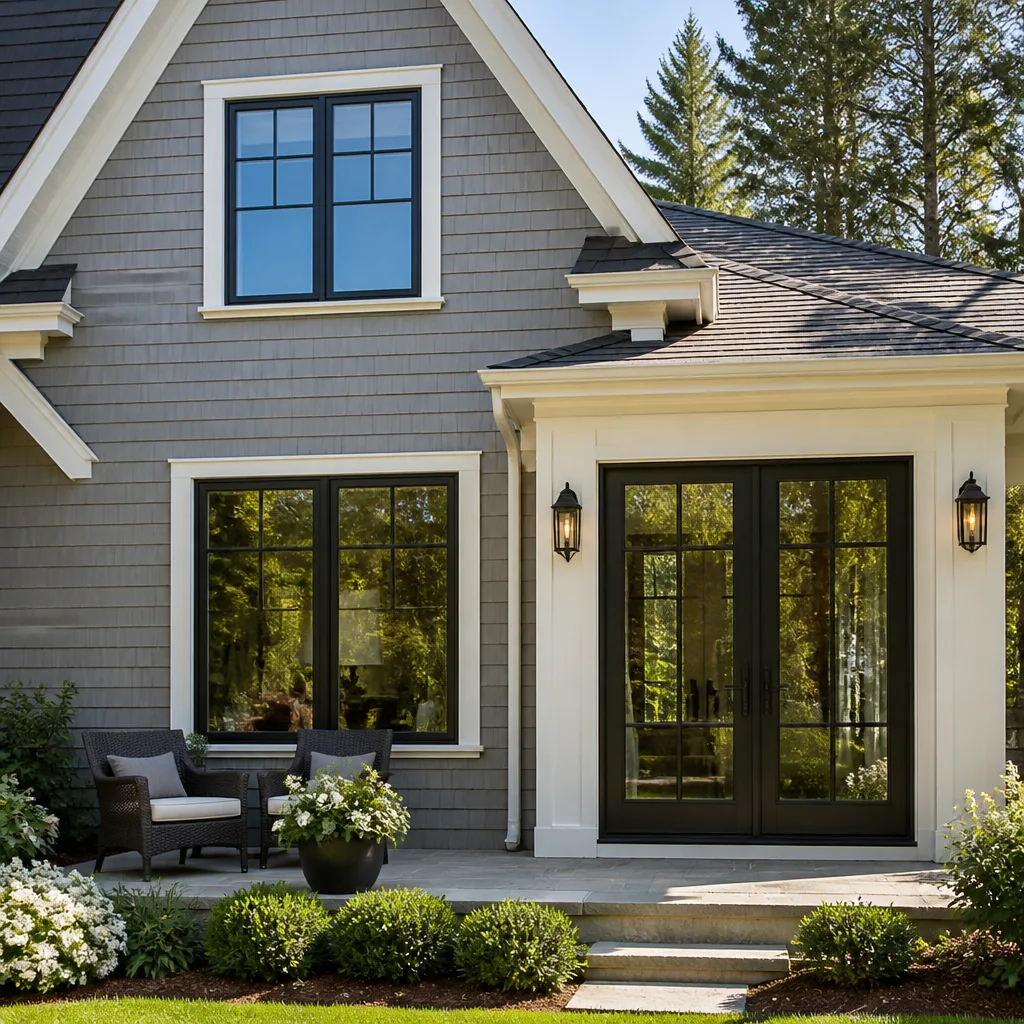
Styles & brands we work with
Signs Your American Standard Driveway & Pavers Is Failing
- Low spots that hold water for more than a day after rain. Fresno gets most of its rain in short winter bursts, and a properly installed paver driveway should sheet water toward the street or a drain within hours. Standing water means the compacted base has settled unevenly underneath, usually from water intrusion through the paver joints over several seasons.
- Pavers rocking or tilting at the edges. When you step on a paver and it tips under your foot, the sand bedding layer has migrated out through the joints. This is the earliest stage of failure and the cheapest one to correct, but it will not fix itself.
- Gaps opening between pavers that used to be tight. Interlocking pavers depend on edge-to-edge contact for their structural strength. Once gaps wider than a quarter inch show up, the row is no longer sharing load, and adjacent pavers begin carrying stress they were never designed to handle.
- Efflorescence or a white chalky film that keeps returning. A one-time white haze on new pavers is normal and weathers off. A chalky residue that reappears season after season means moisture is being drawn up through the paver from the base, which signals a drainage problem under the installation rather than a surface issue.
- Sinking along one edge, especially near the driveway apron or a downspout. This is the failure we see most in Fresno’s Tower District and other older neighborhoods, where original homes were built before modern drainage standards. One concentrated water source undermining the base will pull an entire section out of plane within two or three winters.
If you spot two of these signs in the same area, the driveway is telling you the base is compromised. Surface patching will buy a season at best. We’d rather tell you that up front than take a repair job we know won’t hold.
See the difference
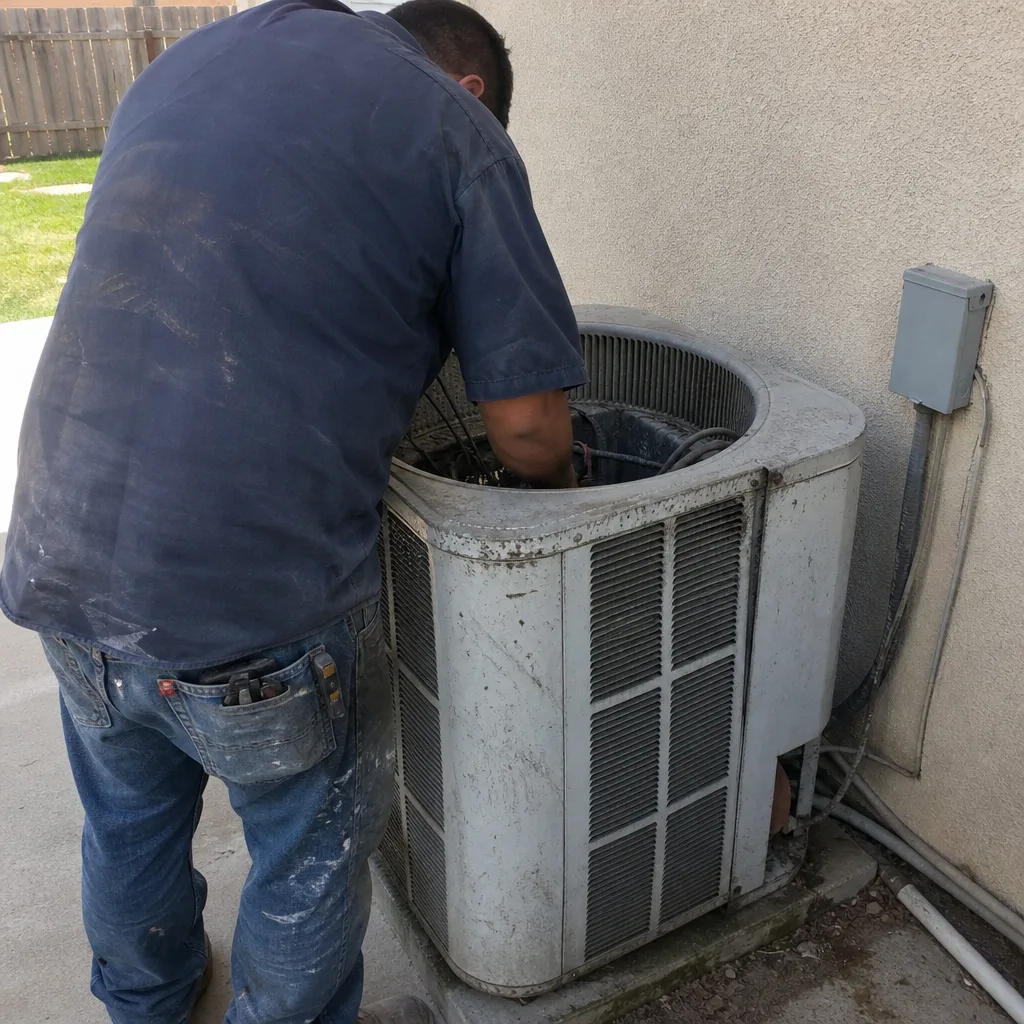 Before
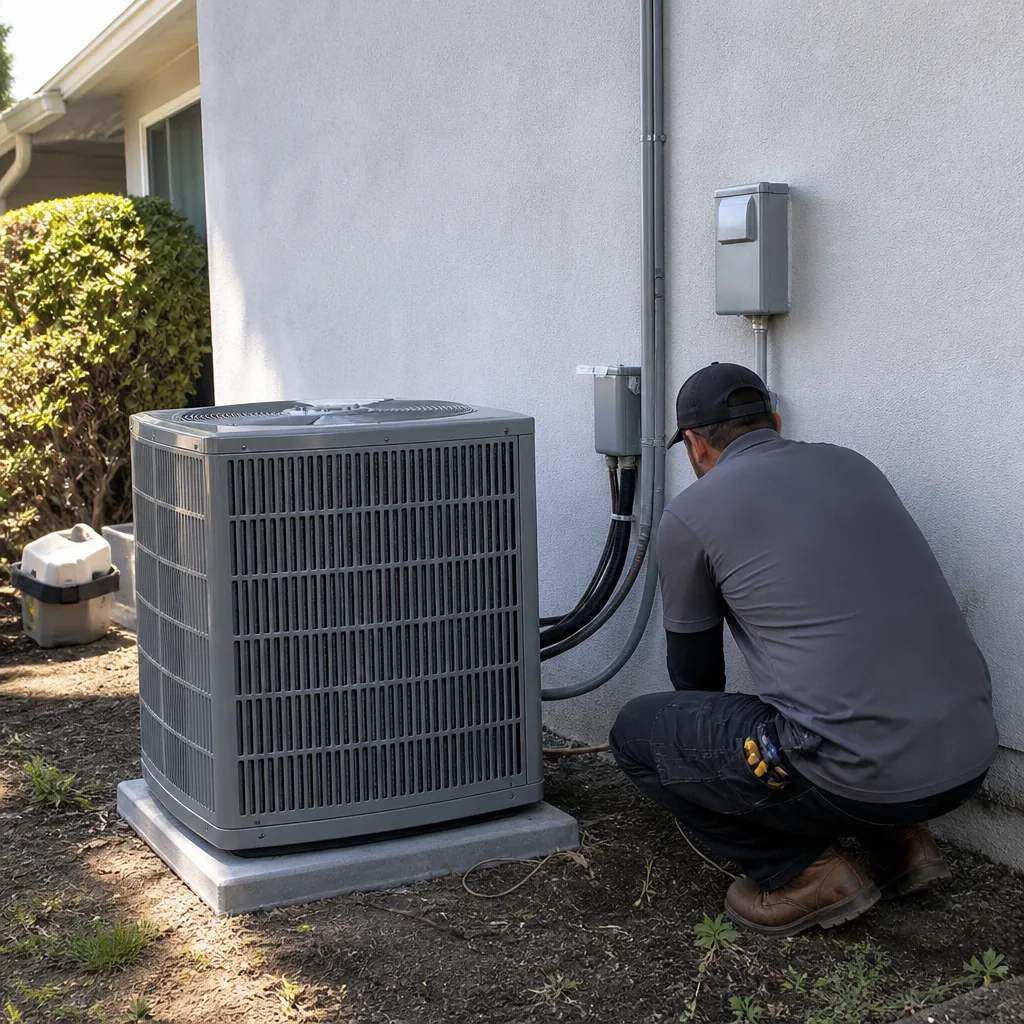 After
After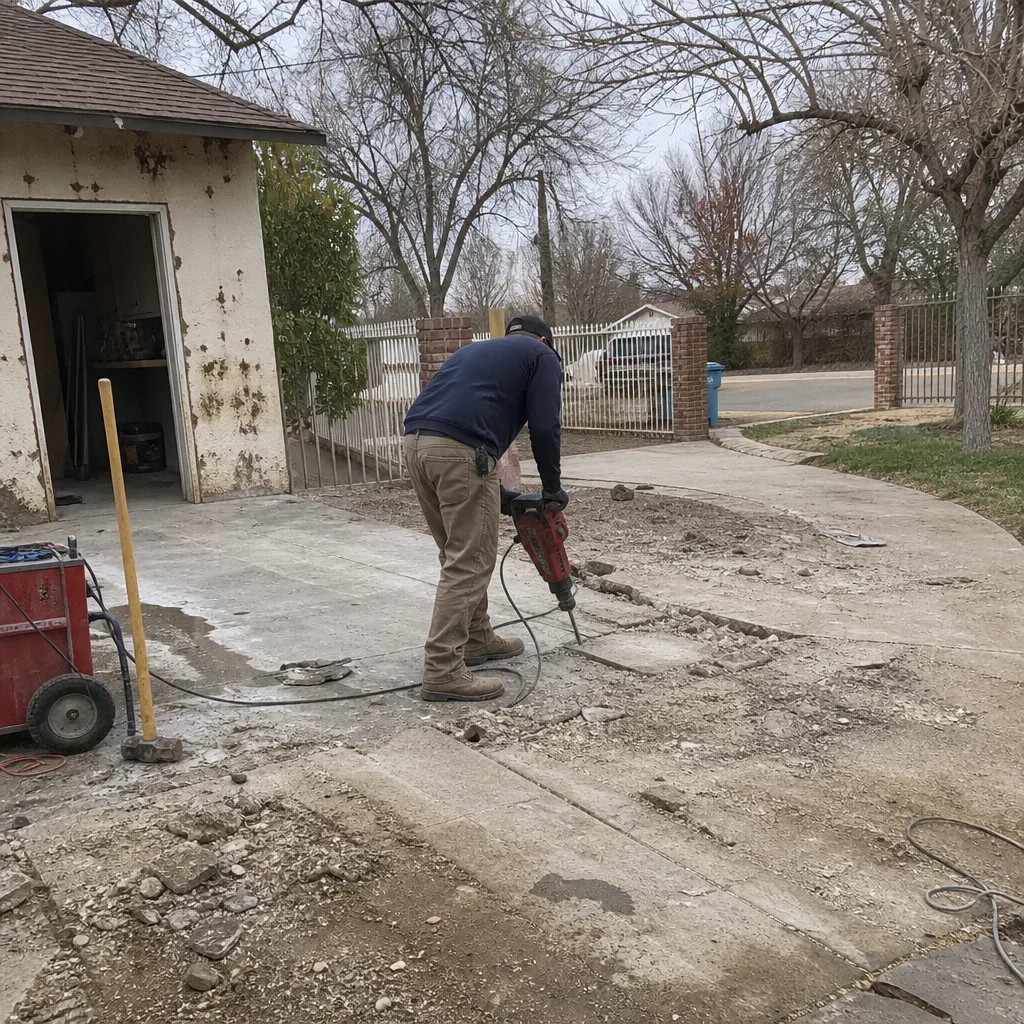 Before
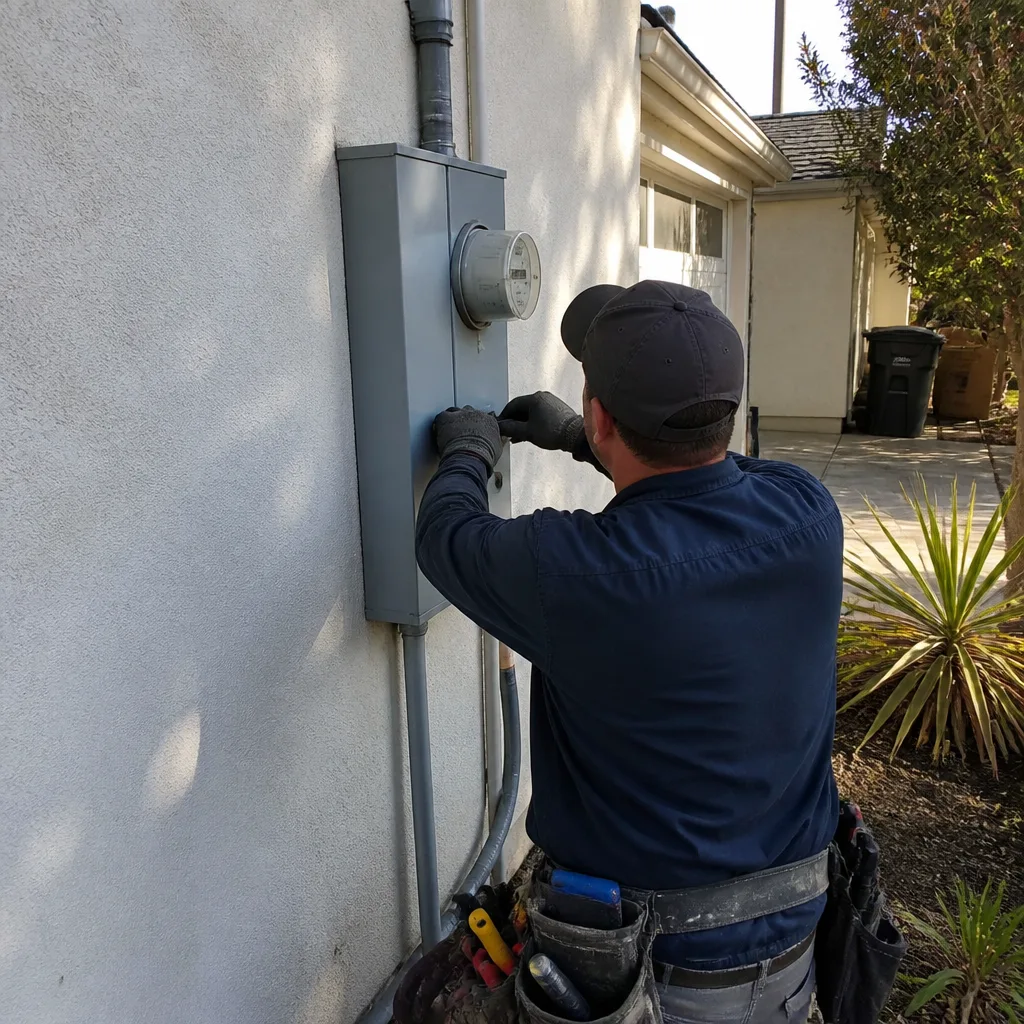 After
After Before
 After
AfterReplacement Cost & What’s Included
In Fresno, a full paver driveway installation runs $7,000 to $18,000. The spread comes down to three things: how much excavation and base rebuild the existing site requires, how many square feet we’re covering, and which paver line you choose. A typical two-car driveway in the Woodward Park area, roughly 600 square feet with a standard 6-inch compacted aggregate base, lands near the middle of that range.
What you get when we do the work: the old surface removed and hauled, the base excavated to proper depth and compacted in lifts, geotextile fabric where the soil calls for it, bedding sand leveled, pavers laid and cut to edges, joint sand swept and compacted, and a final walkthrough where we point out where the water will go when it rains. Every bit of that is written down with prices next to each line before any work starts. No number changes mid-job unless the ground itself changes the scope, and if that happens we stop and talk to you before moving forward. The work carries our 365-Day Done Right Promise: if a paver settles or a joint fails within the year, we come back and make it right.
DIY or Call Us?
For a driveway and paver surface, the honest split is this. You can safely do the diagnosis yourself: walk the driveway after a rain, mark the low spots with sidewalk chalk, check for loose or rocking pavers, and take photos from two angles. That photo set is genuinely useful to us when you call, because it lets us plan which equipment and how much base material to bring.
Where DIY goes wrong is the rebuild. Compacting a base properly requires a plate compactor that most homeowners don’t have in the garage, and under-compaction is the single most common reason a DIY paver driveway fails within three years in Fresno’s clay-heavy soil. The clay here expands when wet and contracts when dry, and a base that hasn’t been compacted to spec will telegraph that movement straight up through the pavers. If the failure is a handful of pavers in an otherwise sound installation, a careful homeowner can reset those. If the failure is dips, spreading gaps, or edge settlement, that’s a base problem, and the fix requires excavation equipment and a dump truck, not a weekend.
If you’re not sure which situation you’re in, call us at (559) 540-8453. We’ll talk through what you’re seeing, and Graham will tell you straight whether it’s a Saturday reset job or a full rebuild. The estimate is free either way.
FAQs
A properly installed American Standard paver driveway with a compacted aggregate base should last 25 to 35 years in Fresno’s climate before the base begins to fail. What shortens that lifespan here is water, not wear. The pavers themselves will easily outlast that timeline; what eventually gives way is the base underneath, especially where drainage has been neglected for years.
Individual sections can be lifted, re-bedded, and re-compacted if the settlement is localized to one or two areas and the rest of the driveway is sound. If the settling runs in a long line across multiple rows or follows the path of a downspout, the underlying base is compromised across a wider span, and a sectional repair will telegraph new problems within a season or two. Call (559) 540-8453 and describe what you’re seeing; we’ll give you a straight answer before anyone steps foot on the property.
Most residential paver driveway replacements in Fresno take three to five working days from demolition to final compaction, depending on access and weather. Demolition and excavation take a day, base building and compaction take a day to two days, and paver laying, cutting, and joint finishing take another one to two days. We’ll give you a start date and a finish date in writing before the crew arrives.
We stock the most common American Standard interlocking pavers in the 80mm thickness at our Fresno yard, and we order less common colors and the permeable line per job, which typically adds three to five days to the timeline. We’ll tell you at the estimate which camp your project falls into, and we’ll build that lead time into the written schedule so you’re never waiting on a surprise.
Written by Graham Stein, Owner, Elmstead Remodeling Fresno at Elmstead Remodeling Fresno, serving Fresno and nearby areas.